Maths
Intent
At Hoo St Werburgh Primary School, our mathematics curriculum is designed to foster a deep understanding of mathematical concepts and skills that will serve students for a lifetime. We aim to create a purposeful learning environment where children engage with mathematics through exploration, investigation, and problem-solving. Our intent is to ensure that every child develops fluency in their mathematical abilities while also being encouraged to apply their knowledge to real-world scenarios.
We are committed to promoting a love for mathematics through creative and interactive teaching methods. This includes using manipulatives, technology, and collaborative learning opportunities that ignite curiosity and enhance problem-solving skills. By instilling a positive mindset towards mathematics, we aspire to empower our students to see mathematics as an integral part of their daily lives.
Furthermore, we ensure that our mathematics curriculum is inclusive and accessible to all learners. We strive to accommodate different learning styles and offer support when necessary, guaranteeing that every child, regardless of their starting point, can achieve mathematical proficiency and confidence. Ultimately, our goal is to equip students with the skills they need to succeed in further education and beyond.
Our Maths Mission is to give every child confidence in maths so that pupils develop mathematical fluency, reasoning and a love of number!
Implementation
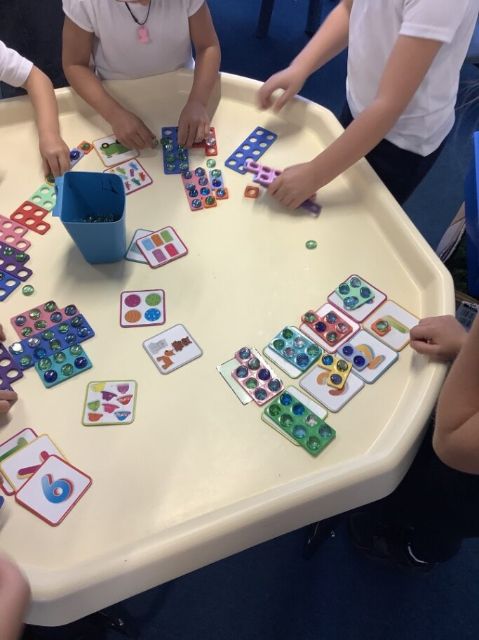
All year groups from Year 1 to 6 follow the same sequence of teaching in their lessons – fluency, reasoning and problem solving. Alongside this, as a child progresses through Hoo St Werburgh, they develop their deep understanding of a concept by following the Concrete, pictorial, abstract approach (CPA). When misunderstanding arises, swift ‘in-class’ action is the first port of call for the teachers with longer term interventions occurring for the necessary children. We supplement our use of White Rose Small Steps with material from NCETM and Primary Stars. Underpinning all of these is a higher level of questioning to encourage the children to think for themselves. In EYFS and KS1, maths is always available within continuous provision allowing children to revisit their learning and practise skills using a range of manipulatives and contexts.
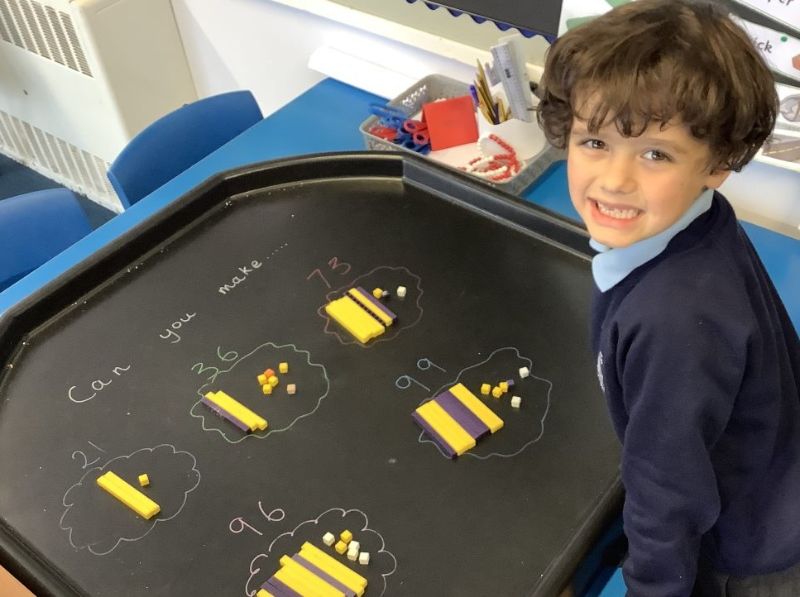
Concrete manipulatives are used to build the strong foundations of number and then are often used to help support the transition from pictorial to abstract or to further support lower ability children throughout the school. To encourage mastery, there doesn’t have to be a linear progression from concrete to pictorial to abstract. Instead, teachers apply a cyclical approach. For example, even when a pupil has worked out the answer using an abstract method, it is beneficial to ask them to use concrete manipulatives to convince others that they are correct.
When teaching for mastery, the CPA approach helps learners to be more secure in their understanding as they have to prove that they have fully grasped an idea. Ultimately, it gives pupils a firm foundation for future learning.
The implementation of times tables is crucial for enhancing mathematical fluency. Regular practice engages students and develops their confidence in problem-solving. Effective strategies, such as interactive games and timed tests, are utilised to reinforce learning and ensure retention of multiplication facts.
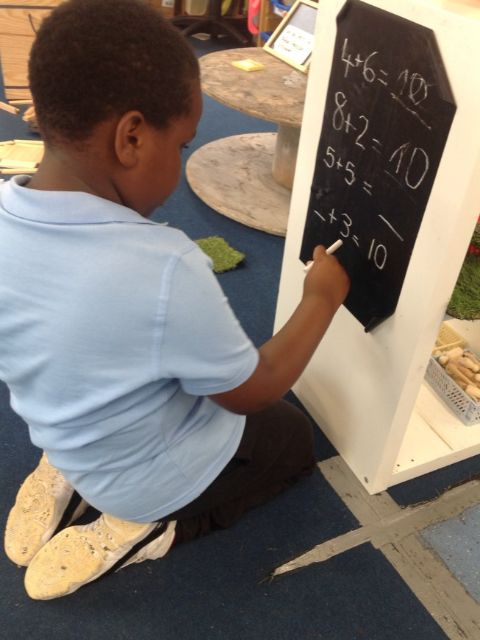
Fluency and mastery lessons help a child develop their efficiency and accuracy with the mechanics of the concept and gives them the skills and confidence to move onto reasoning and problem solving. Through all three stages, talk is an integral part of a maths lesson with the children being encouraged to reason, justify and explain their thinking verbally. It is important that children not only know key facts (e.g. x tables to 12 x 12 and number bonds) but are able to recall them very quickly and accurately, which will further support mathematical learning.
Problem solving is an important skill for all ages and abilities and is taught explicitly in reasoning lessons, although reasoning is still a vital part of every maths lesson. Problem solving questions are often open-ended, with more than one right answer encouraging children to reason and explain.
Impact
The impact of the mathematics curriculum is evidenced by the pupils’ enhanced problem-solving abilities and overall academic performance. The structured programme ensures inclusivity and accommodates diverse learning needs, providing tailored support to each student. Regular assessments allow educators to identify areas requiring improvement, facilitating targeted interventions.
Both formative and summative assessments are used by school staff not just to show progress but also to further a child’s deeper understanding and knowledge, this enable us to minimise gaps in the children’s learning. Teachers record children’s attainment three times per year on our tracking system (HAT) and subject leads are then able to identify trends and track progress. In Year 4, the expectation is that children will be secure in their times tables up to 12 x 12 as at the end of the year, they will complete the statutory assessment for times table.
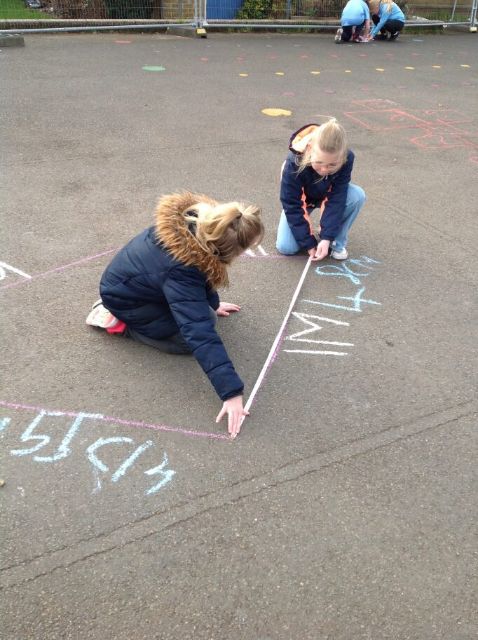
The introduction of practical applications of mathematical concepts has fostered a deeper understanding among learners. For instance, the integration of hands-on activities enables pupils to engage with mathematical principles in real-world contexts, thus reinforcing the relevance of their studies. Staff professional development sessions further equip teachers with innovative strategies to elevate mathematics instruction.
In summary, the multifaceted approach to mathematics education at Hoo St Werburgh Primary School yields significant benefits, establishing a firm foundation for future learning.
Maths Gallery